What Galgos del Sol Can Teach Every Struggling Rescue (Even the Ones Who Think They’ve Heard It All)
I’ll be honest with you: most articles about “successful charities” are unbearable. They read like a LinkedIn post that’s had a baby with a corporate mission statement. Lots of words like “impact” and “journey” and “stakeholders,” none of which have ever once made a hungry dog less hungry.
So let’s not do that. Let’s talk about Tina Solera instead, because her story is genuinely useful, not because it’s inspiring in the empty Instagram-quote sense, but because it’s a working blueprint. Not a perfect one. Not one she’d probably even claim credit for designing on purpose. But a blueprint all the same.
It began as a problem she couldn’t walk past, not a plan she wrote down
In 2007, Tina moved to Spain from Britain with her husband and two young children, chasing better weather and a lifestyle suited to their love of triathlons and marathons. Nobody was thinking about dog rescue. Nobody had a five-year plan involving kennels.
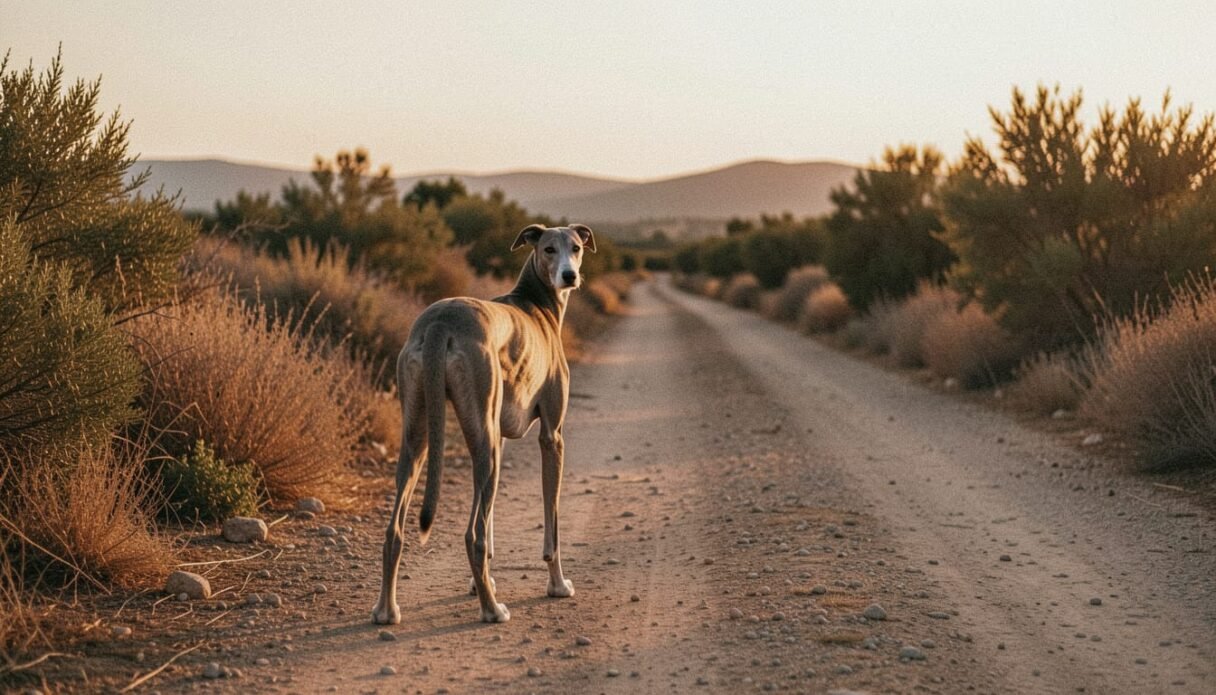
Then she came face to face with a stray galgo, a Spanish hunting greyhound, and something in her shifted permanently. She’s described it as difficult to explain, the connection she felt when the dog looked at her, but she knew in that moment her life had changed.
I want to sit with that for a second, because it’s the opposite of how most people are told to start a charity. We’re taught to identify a “gap in the market,” write a mission statement, register the paperwork, and then go looking for the cause to attach it to. Tina did it entirely backwards. The cause found her in a lay-by, looking hungry. Everything else came after.
There’s a lesson here that a lot of well-meaning rescue founders skip past because it’s uncomfortable: you cannot manufacture the kind of commitment that gets you through year six, year ten, year fifteen. It has to already exist in you before the charity does. If you’re setting one up because it seems like a good idea, rather than because you physically cannot walk past the problem anymore, you may want to sit with that honestly before you register anything.
She picked one animal, one specific injustice, and refused to dilute it
Galgos, the hunting greyhounds of Spain, are abandoned or killed by the thousands every year once hunting season finishes, discarded because they’re not seen as pets, just equipment. That’s the entire premise of Galgos del Sol. Not “animals in general.” Not “we help whatever comes through the door.” One breed, one specific and genuinely horrifying seasonal cruelty, told over and over.
This is where I’ll gently have a go at a lot of well-intentioned rescues. I understand the instinct to help everything that turns up: the cat, the donkey, the injured pigeon someone found in a car park. It comes from a good place. But it makes you impossible to explain in one sentence, and if a stranger can’t explain your charity to their mate down the pub in one sentence, they’re not going to remember you long enough to donate.
Tina’s pitch fits in one sentence. That’s not an accident of luck. That’s discipline, whether she’d frame it that way or not.
She let herself look completely unreasonable for years, and didn’t stop
Here’s the part nobody puts on the “About Us” page. Cynics doubted her sincerity. Others simply wrote the whole thing off as mad. Her own husband used to tell her she couldn’t bring home any more dogs, then go out for a run and come back with one himself. There were nights she slept in her car with a newly rescued dog because there genuinely wasn’t anywhere else for it to go.
I think we do prospective rescuers a disservice by only showing them the polished, thriving version of an organisation and never the sleeping-in-a-car years. Those years are when the whole thing either survives or dies. If you go into rescue work expecting community support and gratitude from day one, you’re going to be blindsided by how much ridicule and quiet judgment actually show up first. Tina’s advice, more or less, was to expect it and keep going anyway. Not glamorous. Also, apparently, correct.
Eventually, the chaos had to become infrastructure
This is the bit that gets skipped in the inspiring version of every founder story, and it’s usually the actual reason most rescues stall permanently at “small and struggling.”
Galgos del Sol is now a registered, legal charity in Spain, the UK and the US, currently caring for over 150 dogs and coordinating adoptions across the UK, US and Belgium. That is not a hobby anymore. That’s cross-border legal compliance, logistics, fostering networks, transport, veterinary partnerships, and a level of admin that would make most volunteers quietly close the laptop and go make a cup of tea instead.
Nobody dreams about becoming excellent at charity registration paperwork. But the rescues that never professionalise past the Facebook-group stage tend to stay capped exactly where they started, run by the same three exhausted people indefinitely. Tina’s team did the boring bit. That’s arguably the least inspiring and most important sentence in this entire article.
And through all of it, she stayed the story
Every piece written about Galgos del Sol still centres Tina, personally. Her voice. Her own account of a rescue going sideways. Her own reflections on what changed her, what she couldn’t tolerate, what it cost her.
I don’t think that’s vanity. I think it’s instinct, and good instinct at that. People don’t send money to a logo. They send money to a person they feel they know a little, even if they’ve never met her, because a person is memorable and an organisation is wallpaper. Rescues that hide behind an anonymous “we” and a donate button are, frankly, leaving money and loyalty on the table.
Where the model isn’t a perfect template
In fairness, and you did ask me not to pretend this is flawless: a decade-plus head start, an ability to self-fund the early chaotic years, and a fair bit of good fortune in who she met along the way (the couple who offered their property for the first kennels, for one) all did real work here too. Not every founder has that runway or that luck, and it would be dishonest to pretend the model transfers perfectly to someone starting from nothing with no safety net. Struggle is part of it, but struggle alone doesn’t guarantee this outcome.
So what does actually transfer, then?
Strip away the parts that were luck or circumstance, and what’s left is genuinely repeatable:
Pick one specific cause you can explain in a sentence, not a paragraph. Expect years of being thought a bit unreasonable, and don’t let that be the thing that stops you. Do the tedious admin nobody wants to do, because that’s what turns a hobby into something that outlives your own energy for it. And stay visible as a person, not just an organisation, because people give to people first and causes second.
None of that guarantees you build the next Galgos del Sol. But ignore all of it, and I can nearly guarantee you won’t.



No responses yet